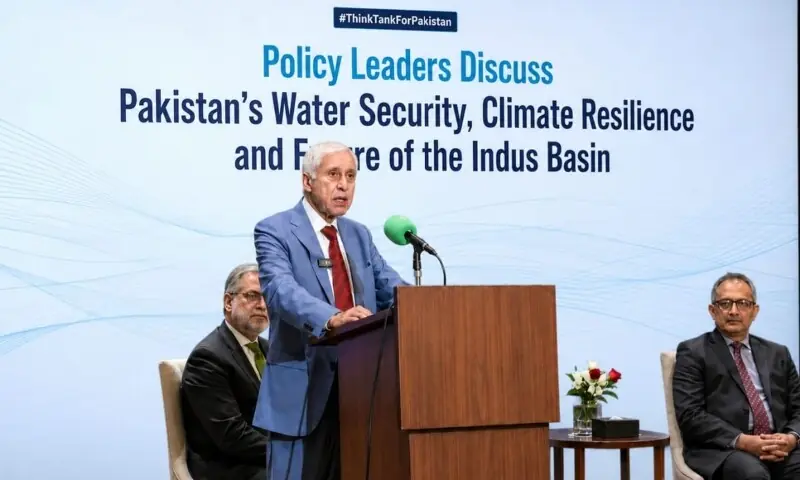
A new research report launched by EMPAK Strategies has issued an urgent call for Pakistan to adopt a comprehensive national water security policy to address escalating flood risks and a deepening water crisis. The report, titled ‘Water, Climate and Diplomacy: Securing Pakistan’s Indus Basin Future,’ was presented at a seminar in Islamabad, highlighting the nation’s critical vulnerability to climate-related disasters.
The report identifies a convergence of extreme rainfall, inadequate water storage capacity, aging irrigation infrastructure, and poor groundwater governance as key factors that have significantly increased the country’s risk profile. It stresses that climate change, rapid glacier melt, and mounting pressure on the Indus Basin have pushed Pakistan into a severe water security crisis, demanding a shift from short-term emergency responses to a strategic, long-term policy framework.
To mitigate these risks, the report proposes five key policy priorities, including the effective implementation of the 1991 Water Apportionment Accord, expansion of strategic water storage and flood management infrastructure, and enhanced hydrological cooperation with neighboring countries. It also advocates for climate-smart agriculture, digital water accounting, and the mobilization of international climate finance. Experts warn that without coordinated governance reforms and sustained investment, Pakistan risks recurring humanitarian crises and compromised development outcomes.