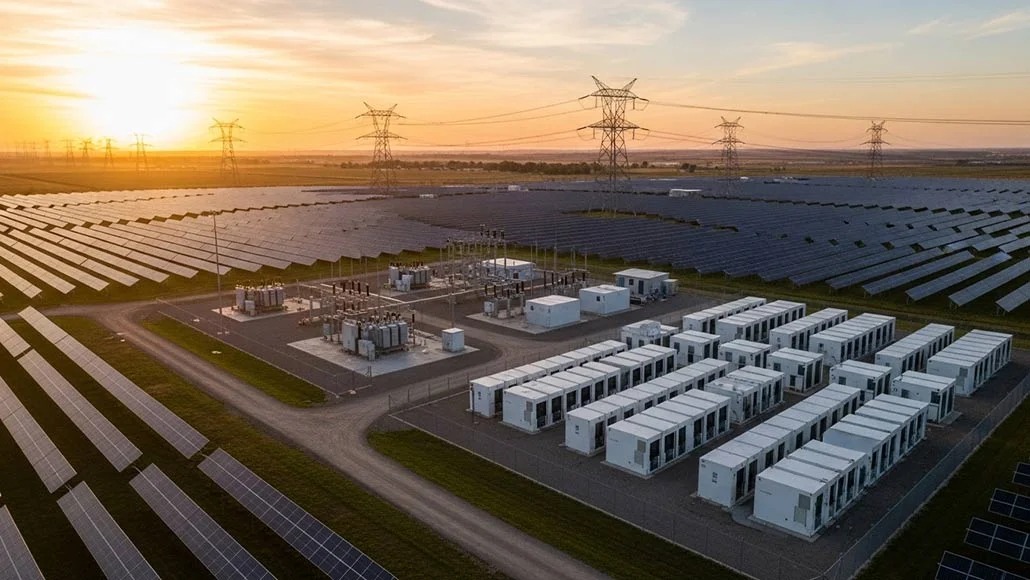
The Government of Pakistan, through the Ministry of Energy (Power Division), has approved a landmark initiative to develop a large-scale battery energy storage system (BESS) designed to enhance grid stability, integrate renewable energy, and reduce power outages. The project, one of the first of its kind in South Asia at this scale, aims to deploy advanced lithium-ion and flow battery technology to store surplus electricity from solar, wind, and hydropower sources for use during peak demand periods and system emergencies.
Read More: SBP Announces Major Policy Measures to Boost Lending to SMEs and Priority Sectors
The proposed battery storage infrastructure will be strategically located near major load centers and renewable energy hubs, with an initial cumulative capacity target of over 500 megawatt-hours (MWh). By providing rapid-response frequency regulation, voltage support, and backup power, the system will improve the reliability and efficiency of the national grid, reduce reliance on expensive fossil-fuel-based peaking plants, and support Pakistan’s transition toward a sustainable, resilient energy mix.
This initiative is aligned with the National Electricity Plan and the Alternative and Renewable Energy (ARE) Policy, which prioritize grid modernization and energy storage as key enablers for scaling up variable renewable energy (VRE). The project is expected to attract significant investment from international developers and technology providers under a public-private partnership (PPP) model.
“Investing in large-scale battery storage is a strategic imperative for ensuring a stable, cost-effective, and sustainable power supply. This project will help balance our grid, maximize the use of clean energy, and lay the foundation for a modern, smart electricity system in Pakistan,” stated a senior official from the Ministry of Energy.
Implementation is slated to begin in 2025, with feasibility studies and tender processes currently underway.