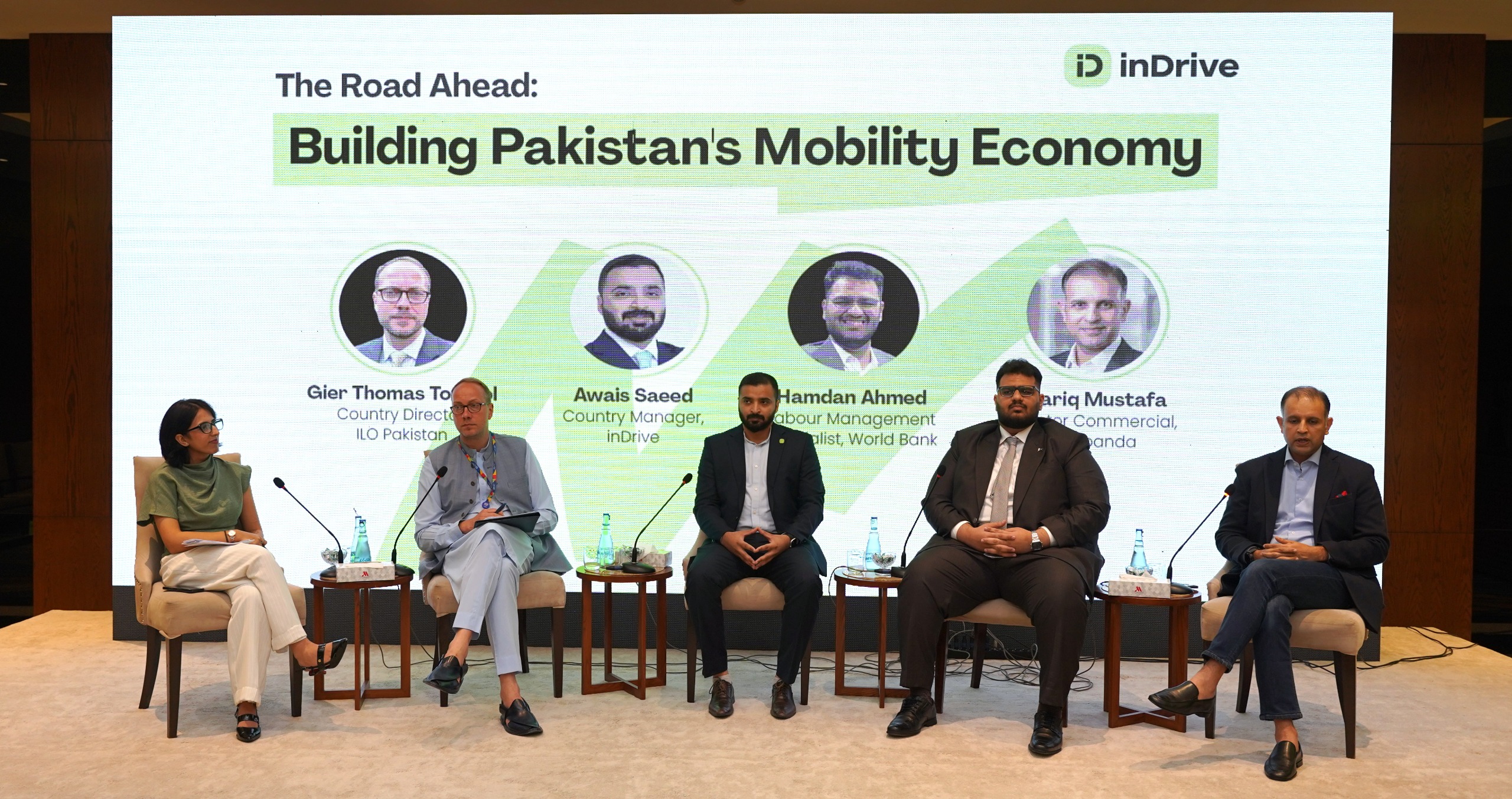
KARACHI: inDrive has claimed it now commands nearly 60 per cent of Pakistan’s ride-hailing market, a position its founder and Chief Executive Officer Arsen Tomsky attributes to the company’s focus on markets where both drivers and passengers feel constrained by dominant platforms.
Read More: Pak Qatar General Takaful Limited (PQGTL) IPO Opens to Public Investors
According to Mr Tomsky, inDrive’s growth is rooted in a pricing model designed to counter monopolistic and duopolistic practices common in the ride-hailing industry. Unlike conventional platforms, inDrive allows passengers and drivers to negotiate fares directly, creating a more transparent and flexible system that prioritises fairness for both sides.
The origins of this model trace back to Yakutsk, Russia, one of the coldest inhabited cities in the world, where winter temperatures can plunge to minus 40 degrees Celsius. During one New Year’s Eve, taxi operators allegedly colluded to raise fares sharply at a time when walking outdoors was nearly impossible. In response, a group of students created a social media page called Independent Drivers, enabling users to post their routes and the price they were willing to pay, with drivers responding and negotiating directly.
The idea quickly gained traction, attracting around 50,000 users in the small city and disrupting the existing taxi cartel. It also drew the attention of Mr Tomsky, who was then leading one of Yakutsk’s largest IT companies. Building on this concept, he launched inDrive, which has since expanded over the past 12 years into 48 countries, including Pakistan.
Explaining the company’s strategy, Mr Tomsky said inDrive typically enters markets where users face rising commissions, unpredictable pricing, and fare surges that can increase costs by up to five times during peak hours. He claims inDrive maintains a lower commission structure, generally ranging between eight and 12 per cent, positioning the platform as a more balanced alternative in the ride-hailing ecosystem.