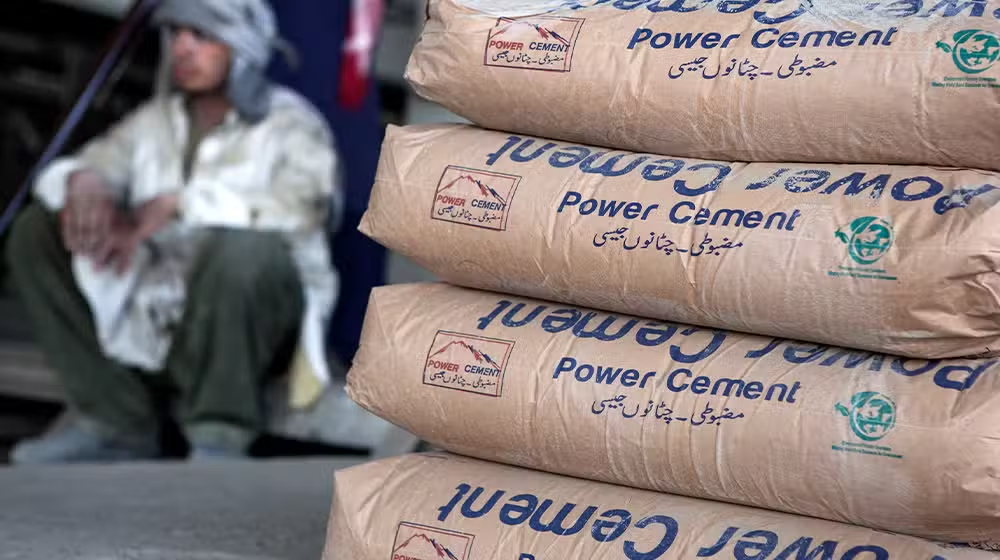
Pakistan’s cement sector has recorded a significant growth trajectory with cement sales rising by over 12.5 percent in February 2026 compared to the same month last year. The robust increase reflects strengthening construction activity and improving demand dynamics across both domestic and export markets.
Read More: Engro Holdings Expands Telecom Tower Footprint to Over 15,000 with Deodar Acquisition
According to data released by the All Pakistan Cement Manufacturers Association, total cement sales during February 2026 reached approximately 4.5 million tons, up from around 4 million tons in February 2025. This double-digit growth represents one of the strongest monthly performances for the sector in recent years and signals a potential sustained recovery in construction-related activity.
Domestic Market Leads Growth
The domestic market emerged as the primary driver of growth, with local cement dispatches increasing by nearly 14 percent year-on-year. This surge in domestic offtake suggests accelerating construction activity across both public infrastructure projects and private housing developments. The government’s focus on development spending and the construction industry’s gradual recovery from previous economic challenges appear to be bearing fruit.
Industry experts attribute the strong domestic performance to multiple factors, including improved macroeconomic stability, increased development spending, and the resilience of Pakistan’s construction sector. The growth also reflects pent-up demand that had accumulated during periods of economic uncertainty and higher input costs.
Export Market Shows Resilience
Exports also contributed positively to the overall growth picture, with cement exports rising by approximately 8 percent during February 2026. This export growth demonstrates the competitiveness of Pakistani cement in regional markets despite logistical challenges and global economic uncertainties.
The export performance is particularly noteworthy given the intense competition in regional cement markets and the logistical complexities involved in cross-border trade. Pakistani cement manufacturers have successfully maintained their presence in traditional export destinations while exploring new markets for growth.
North-South Dynamics
The growth was broadly distributed across both northern and southern manufacturing zones, reflecting countrywide demand strength. Northern-based mills, which primarily serve domestic markets, reported particularly strong dispatches, benefiting from development activity in Punjab, Khyber Pakhtunkhwa, and other northern regions.
Southern-based mills, which have greater access to export markets through port facilities, also reported healthy growth, supported by both domestic demand in Sindh and Balochistan and export orders. The balanced growth across regions suggests that the recovery in cement demand is not confined to specific geographic areas but reflects broader economic momentum.
Industry Capacity Utilization
The strong sales growth has improved capacity utilization rates across the cement sector, providing much-needed relief to manufacturers who have invested heavily in expanding production capacity in recent years. Higher capacity utilization allows manufacturers to spread fixed costs over larger production volumes, improving profitability and financial sustainability.
Industry analysts note that sustained demand growth at current rates could absorb existing spare capacity within the next two to three years, potentially justifying additional investment in new production lines. However, manufacturers remain cautious about making major capital commitments until demand growth demonstrates consistent momentum over multiple quarters.
Pricing Environment
The strong demand environment has also supported cement pricing, with manufacturers able to maintain stable prices despite rising input costs. Energy costs, particularly electricity and fuel, remain significant concerns for the industry, and stable pricing has helped protect profit margins.
However, manufacturers continue to monitor cost pressures closely, as any sharp increase in energy prices could squeeze margins if not accompanied by corresponding price adjustments. The industry’s ability to maintain pricing discipline in a growing market will be crucial for sustained profitability.
Industry Outlook
Looking ahead, cement manufacturers express cautious optimism about the remainder of 2026. Continued government focus on infrastructure development, including major road and dam projects, is expected to support domestic demand. Additionally, the construction industry’s recovery from previous slowdowns could generate sustained offtake from the private housing sector.
Export prospects will depend significantly on regional economic conditions, particularly in Afghanistan and other traditional markets, as well as the competitiveness of Pakistani cement compared to offerings from Iran, India, and other regional producers. Manufacturers are exploring opportunities to diversify export destinations to reduce dependence on any single market.
Challenges Remain
Despite the positive February performance, the cement sector continues to face significant challenges. These include high energy costs, which account for a substantial portion of production expenses, and the burden of taxes and levies imposed by federal and provincial governments. Manufacturers have repeatedly called for tax relief to support the industry’s competitiveness and growth.
Transportation and logistics costs also remain elevated, affecting both domestic distribution and export competitiveness. Improvements in road infrastructure and railway connectivity could help address these challenges, but progress remains gradual.
About the All Pakistan Cement Manufacturers Association
The All Pakistan Cement Manufacturers Association (APCMA) is the representative body of the cement industry in Pakistan, comprising all major cement manufacturers operating in the country. The association provides industry data, advocates for policy reforms, and promotes the interests of the cement sector.