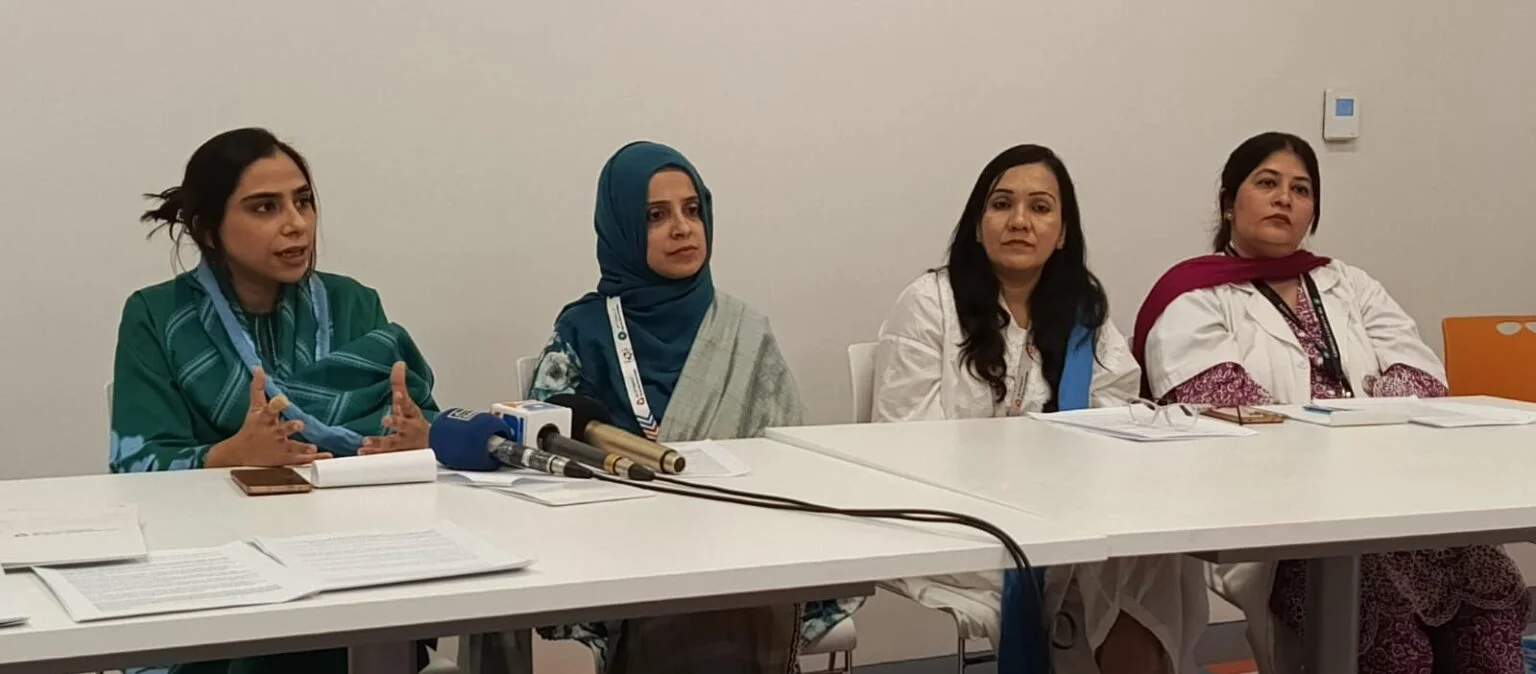
Marking World Autism Awareness Day, the Aga Khan University Hospital (AKUH) convened a media roundtable urging a comprehensive, community-driven approach to supporting children with Autism Spectrum Disorder (ASD), highlighting critical gaps in early diagnosis, awareness, and access to care across the country.
Bringing together developmental paediatricians, speech and language therapists, and child psychiatrists, the session focused on a pressing concern: children with ASD in Pakistan are often identified late, while families face the journey with limited guidance and support.
Opening the discussion, experts posed a central question—while therapies remain essential, are they sufficient on their own?
According to the World Health Organization, approximately one in 127 children globally is diagnosed with ASD. In Pakistan, however, the absence of robust national surveillance data obscures the true scale of the condition. An ongoing study at AKUH, which screened 5,445 children, suggests a growing number of identified cases, particularly in middle-income populations, pointing to disparities in awareness and access.
Professor Shahnaz Ibrahim, Section Head of Paediatric Neurology at AKUH, underscored the urgency of early identification. She noted that beyond delayed diagnosis, a culture of silence and misinformation continues to hinder timely intervention. Many families, she said, remain unaware of ASD and available support systems, often advised to “wait and see,” resulting in lost opportunities during critical developmental periods.
Experts reiterated that Autism Spectrum Disorder is a neurodevelopmental condition—not a disease—and is not caused by vaccines, parenting styles, screen time alone, or spiritual factors. Symptoms, affecting communication, social interaction, and behaviour, can emerge as early as the first year of life.
A key outcome of the roundtable was the call to expand support beyond clinical therapy. Drawing on globally recognised child development frameworks, participants highlighted the importance of addressing multiple dimensions of a child’s life, including function, physical wellbeing, family support, social inclusion, recreation, and future independence.
Dr Sidra Kaleem, Associate Professor at AKUH, stressed that improving outcomes requires coordinated efforts across families, schools, healthcare systems, and communities. “Early action can significantly change a child’s developmental trajectory,” she said, adding that meaningful support cannot rest solely within clinical settings.
Panellists called on policymakers, educators, and healthcare providers to prioritise routine developmental screenings, increase the availability of trained specialists beyond urban centres, and foster inclusive environments where families can seek help without fear of stigma or judgement.
The discussion concluded with a unified message: effective autism support in Pakistan demands a shift from isolated clinical care to a holistic, community-wide model that empowers children and their families at every stage of development.