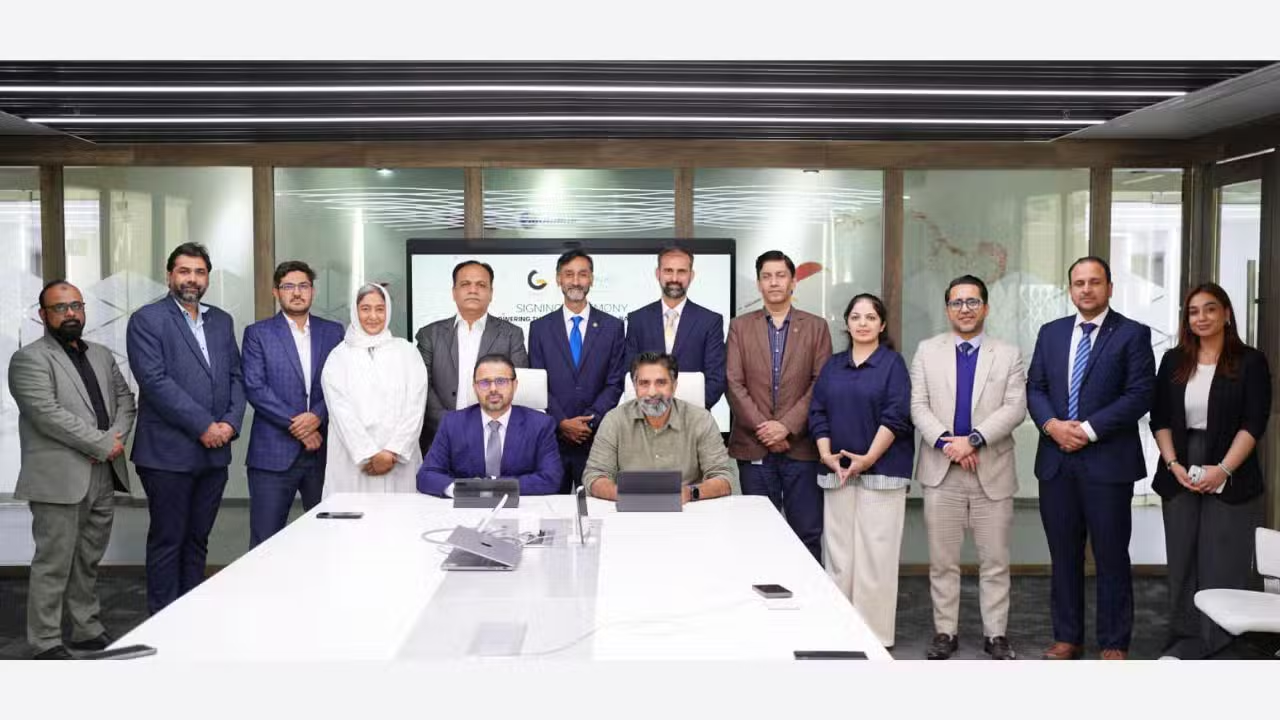
Pakistan’s financial technology landscape has reached a new milestone with the launch of Raqami Islamic Digital Bank, the country’s first fully Islamic digital retail bank, powered entirely by locally hosted cloud infrastructure provided by Garaj. The development represents a significant step forward for both Islamic banking and digital financial services in Pakistan.
Read More: MLCF Secures Pioneer Cement Shares with 61% Allotment as Offer is Oversubscribed
Raqami Islamic Digital Bank enters the market with a fully digital proposition, offering Shariah-compliant banking products and services through mobile and online channels without any physical branch network. The bank aims to serve Pakistan’s growing population of tech-savvy consumers seeking convenient, ethical banking solutions aligned with Islamic principles.
Local Cloud Infrastructure
What sets this launch apart is its technological foundation. Garaj, a Pakistani cloud services provider, has supplied the complete cloud infrastructure on which Raqami’s banking platform operates. By keeping all data and systems within Pakistan, the bank ensures compliance with local data residency requirements while supporting the growth of the domestic technology ecosystem.
The use of locally hosted infrastructure addresses concerns about data sovereignty that have accompanied some digital financial services. All customer information and transaction data remains within Pakistan’s borders, subject to local laws and regulations.
Islamic Banking Proposition
Raqami enters a growing market for Islamic banking in Pakistan. The country has one of the world’s largest populations seeking Shariah-compliant financial services, and digital delivery models offer new ways to reach underserved segments. The bank’s fully digital model eliminates the cost of physical branches, potentially allowing more competitive pricing and wider access.
Products and services have been developed in consultation with Shariah advisors to ensure strict compliance with Islamic financial principles. These include prohibitions on interest (riba) and requirements for asset-backing in transactions.
Market Context
Pakistan’s banking sector has seen rapid digitalization in recent years, with conventional banks investing heavily in mobile apps and online platforms. However, Raqami represents a new category: a bank built from scratch as a digital-only entity with no legacy systems or branch network to maintain. This “digital native” structure allows for greater agility and a user experience designed specifically for mobile consumers.
The State Bank of Pakistan has encouraged digital banking as part of its financial inclusion strategy, issuing licenses to several digital players. Raqami’s Islamic positioning adds diversity to the digital banking landscape and serves a segment with specific religious and ethical requirements.
Garaj’s Role
For Garaj, the partnership demonstrates the capability of Pakistani cloud infrastructure providers to support mission-critical financial services. The company has invested in building data centers and cloud platforms that meet the security, reliability, and compliance requirements of regulated financial institutions.
By choosing a local provider over international cloud giants, Raqami also contributes to the development of Pakistan’s digital infrastructure ecosystem. The partnership creates referenceable use cases for Garaj’s services and demonstrates that local providers can meet the demanding standards of the financial sector.
Customer Experience
Raqami’s digital platform is designed for seamless onboarding and everyday banking. Customers can open accounts entirely online, with digital verification replacing physical documentation. The app provides access to Islamic current and savings accounts, payment services, and eventually financing products, all managed through an intuitive interface.
The bank aims to appeal particularly to younger Pakistanis who prefer mobile-first interactions and value both convenience and religious compliance. Its marketing emphasizes the combination of modern technology with timeless ethical principles.
Industry Implications
The successful launch of a fully Islamic digital bank on local infrastructure could encourage similar ventures. It demonstrates that the regulatory framework, technology ecosystem, and market demand exist to support specialized digital financial institutions. Other players may now consider Islamic digital banking or other niche propositions.
For the broader fintech sector, the use of Garaj’s infrastructure validates the “local cloud” model and may encourage other financial institutions to consider domestic providers for their technology needs. This could strengthen Pakistan’s digital sovereignty while building local technical capacity.
Raqami Islamic Digital Bank now begins the work of acquiring customers, building trust, and proving its business model. With first-mover advantage in the Islamic digital space and a technology foundation designed for scale, the bank enters the market with significant potential.