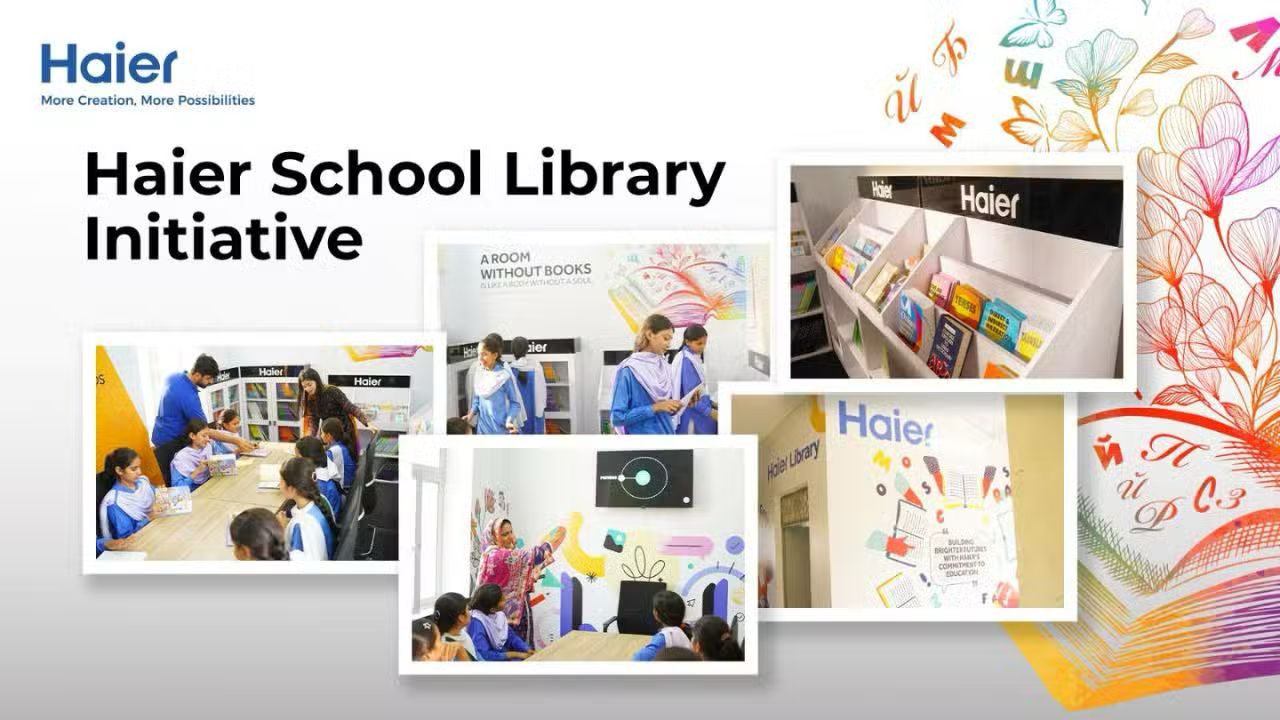
Haier Pakistan has announced the launch of its “Haier School Libraries Initiative,” aimed at transforming public education by installing vibrant, resource-rich libraries in schools located across underserved communities. This initiative underlines the company’s commitment to educational access, literacy awareness, and youth empowerment.
Read More: Fauji Foods Registers 113% Surge in Profit as Half‑Year Results Impress
The first phase will target around 20 public schools in rural and peri-urban districts, where each library will be furnished with hundreds of curated books—from textbooks and reference volumes to fiction, biographies, science, and creative arts. Shelving units, study corners, and digital reading tools like tablets with e-books and learning apps will be provided to stimulate both literacy and digital engagement.
Haier aims to promote reading as a habit by organizing monthly reading clubs, storytelling sessions, and writing workshops, guided by local volunteers and teachers. Librarian training programs are also part of the initiative—enhancing educators’ ability to facilitate engaging learning environments and track student progress.
In addition, Haier will integrate digital learning pods featuring e-learning apps, language tutorials, and interactive quizzes. Community outreach efforts will include reading contests, parental engagement sessions, and educational fairs to promote the importance of learning and reading culture.
Haier’s leadership emphasized the broader vision: fostering curiosity and lifelong learning among students who often lack access to libraries or digital resources. The program supports sustainable development goals focused on quality education and gender equality by ensuring inclusive access.
This initiative is expected to gradually expand to 100 schools across multiple provinces, with ongoing evaluation to assess reading levels, attendance improvement, and increased digital usage. Haier’s School Libraries Initiative sets a new benchmark in corporate social responsibility—demonstrating how business leadership can advance national progress in education and equitable opportunity.