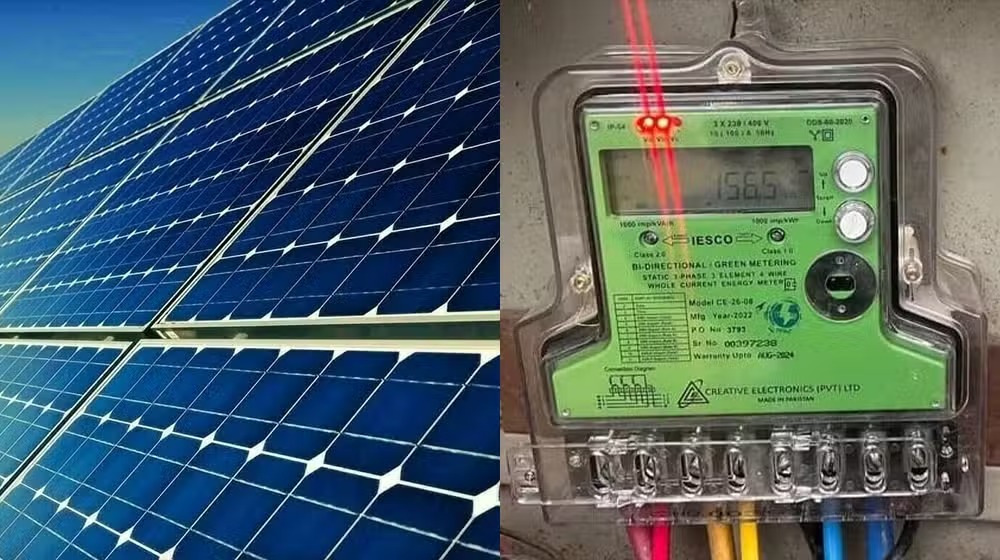
The National Electric Power Regulatory Authority (NEPRA) has outlined the operational framework for its newly introduced gross metering policy, designed to benefit solar power users by enabling full export compensation for all electricity generated by their systems. The policy aims to accelerate the adoption of solar energy, support renewable investment, and improve energy sustainability while ensuring clear regulatory standards for producers and consumers alike.
Read More: Engro Executes Rs133 Billion Financing Deal to Expand Telecom Tower Business
Under the new gross metering mechanism, solar users who generate electricity through rooftop or commercial solar installations will receive credit for every unit of power they feed into the national grid. Unlike net metering — where only excess electricity beyond self‑consumption is credited — gross metering pays for the entire solar generation at a predetermined rate, making solar systems economically more attractive for homeowners, businesses, and industrial users.
Participation in the gross metering programme requires eligible solar users to install bi‑directional meters that record both the electricity fed into the grid and the electricity consumed from it. The utility company then compensates solar producers based on the total amount of solar energy supplied to the grid, according to tariff terms set by NEPRA. These payments are credited to the user’s utility account or settled through an agreed mechanism between the user and the distribution company, ensuring transparency and fairness in billing.
NEPRA’s policy also specifies technical and interconnection requirements to maintain grid stability, including compliance with safety standards, quality control, and proper certification of solar installations. Solar users must ensure that their systems meet these criteria before gross metering connections can be activated, with distribution companies responsible for verification and meter installation.
Regulators and solar industry experts say the gross metering policy is expected to provide a significant boost to solar energy investment in Pakistan by improving the financial viability of renewable projects and encouraging more customers to adopt clean energy solutions. By offering full credit for generated solar power, the framework aims to reduce payback periods for solar systems, attract private sector participation, and help meet national renewable energy goals.
Critically, the policy is designed to promote distributed generation, reduce pressure on conventional power sources, and support environmental goals by increasing the share of clean energy in the overall generation mix. As the cost of solar technology continues to decline globally, the gross metering policy positions Pakistan to benefit from cost‑effective and sustainable energy deployment.
In summary, NEPRA’s gross metering framework represents a major step toward empowering solar users with clearer incentives, stronger economic returns, and enhanced participation in the country’s renewable energy transition. Solar users, businesses, and investors are now better placed to leverage solar generation as an economically viable and environmentally responsible energy solution.