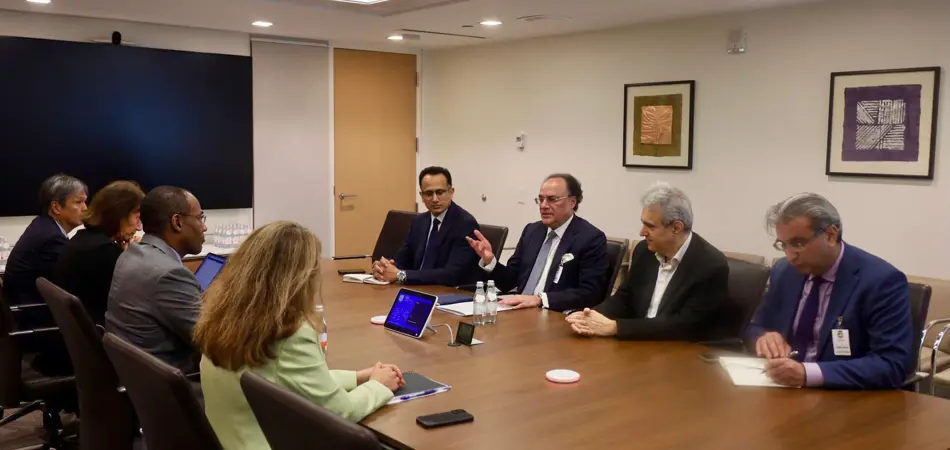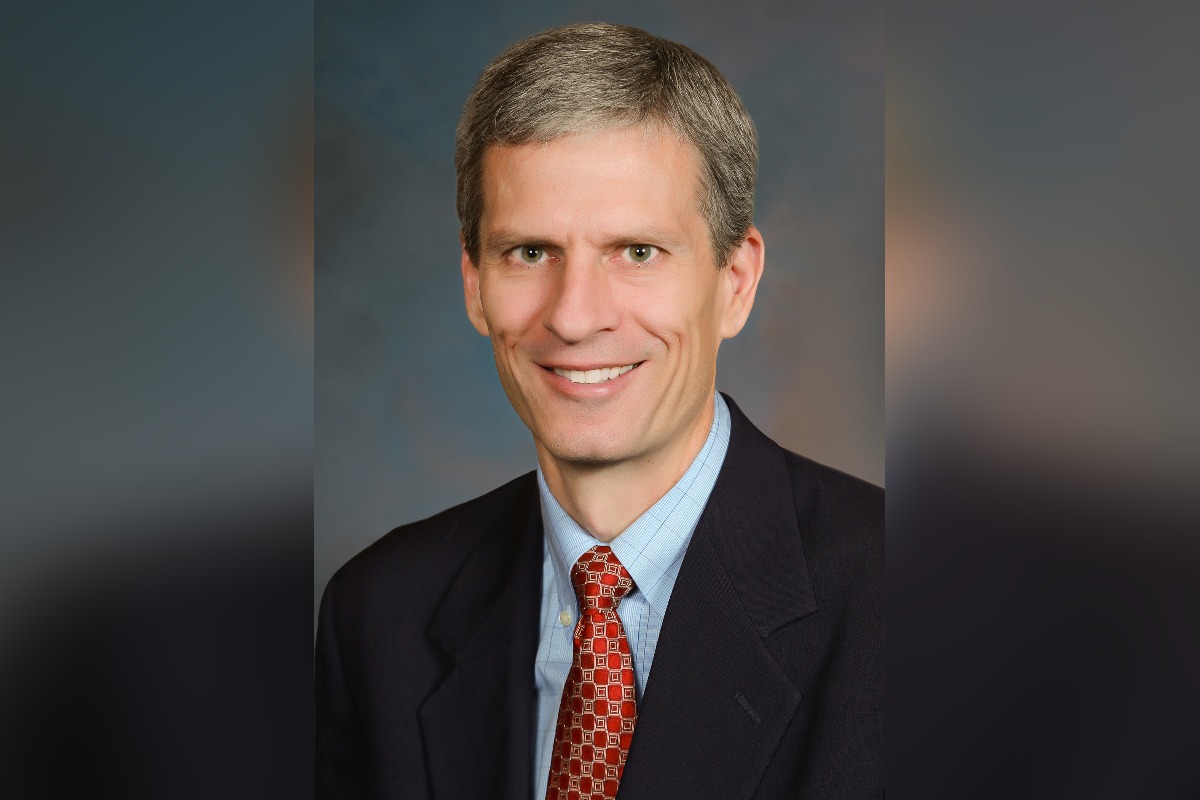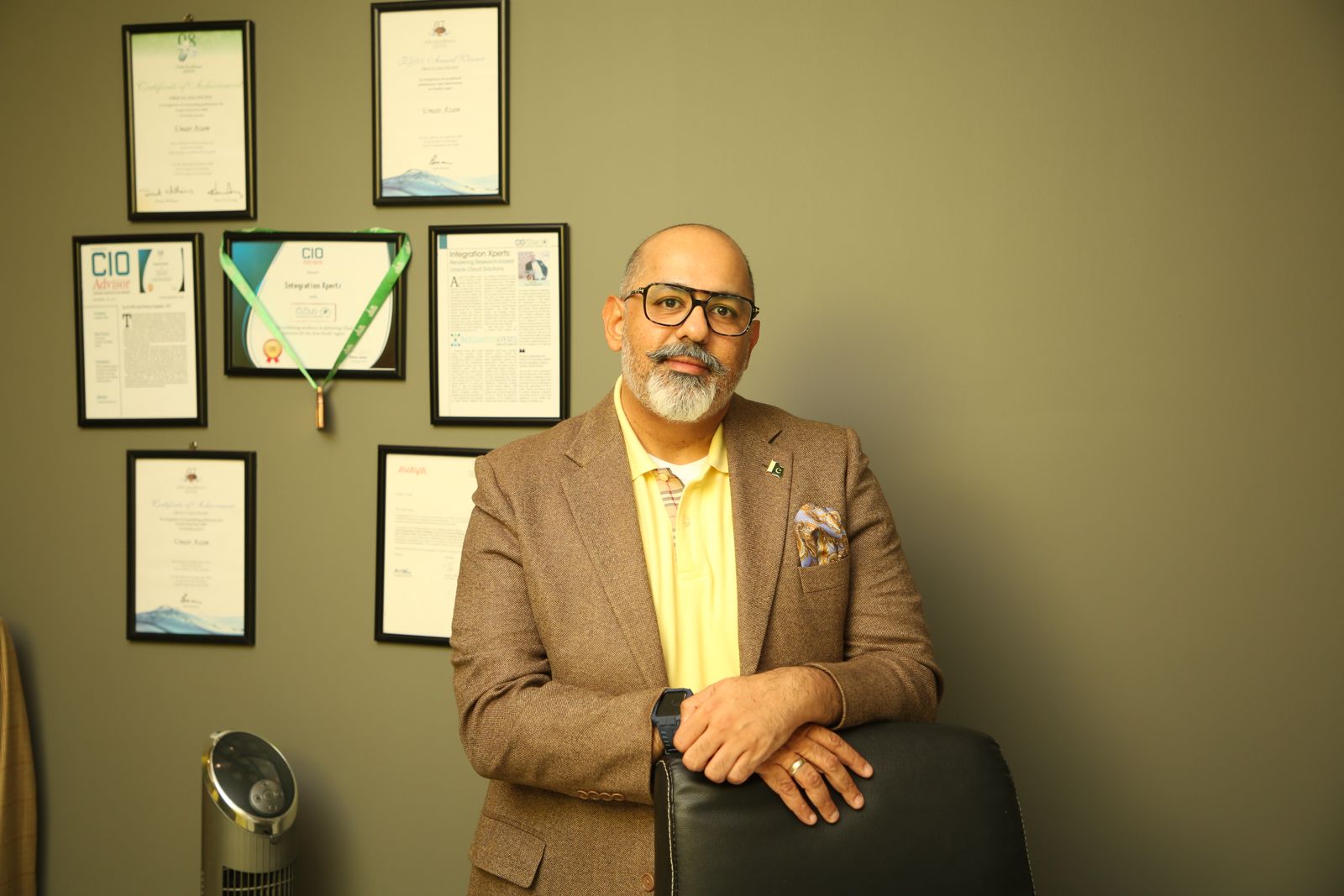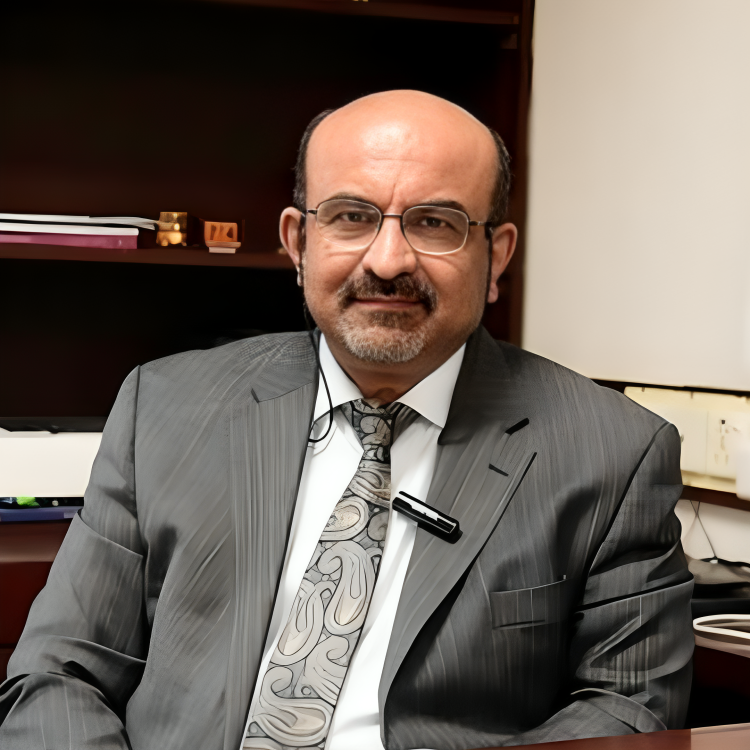
At CorpCurrent, we were honored to speak with Dr. Farid Panjwani, Dean of the Institute for Educational Development at Aga Khan University. In a thoughtful and wide-ranging discussion, Dr. Panjwani guided us through his journey from founding a pioneering research centre at University College London to his decision to return to Pakistan, unpacking his perspectives on educational development, the challenges and opportunities in the Pakistani context, and his vision for cultivating a new generation of educational leaders. He reframed the conversation around education from a simple matter of access to a deeper question of quality and relevance, arguing for its role as the essential bedrock for sustainable and equitable progress. Discover our full conversation below:
Read More: Imran Raza Jaffry Publishes Influential Insurance Guide, Announces New Book on Global Practices
Q1. Can you talk us through the journey of the Institute of Educational Development in Pakistan? What have been its key achievements over the years?
The journey of AKU IED began with a crucial need, that the transformation of education hinges on exceptional teachers and visionary leaders. This vision was our compass, guiding us from the very start.
Our path unfolded through a multi-pronged mission. One of our earliest and most crucial milestones was establishing rigorous teacher education programmes. We didn’t just train teachers in pedagogy; we equipped them to become reflective practitioners and change-makers, with thousands of our graduates now leading reforms in their own schools and districts.
A pivotal chapter in our story came when we confronted a fundamental problem, teaching was not being treated as the skilled profession it truly is. We challenged this status quo by publishing a White Paper that became a blueprint for change. This document exposed critical gaps and served as a call to action, ultimately leading to the creation of Sindh’s first structured teaching license. This journey from research to implementation proved that with evidence and political will, real change is possible.
Beyond the classroom, we invested deeply in educational leadership, working with principals and policymakers to create environments where teachers could thrive. Our most recent highlight in this effort was the completion of the Education Fellows programme, which successfully recruited, trained, and deployed over 1,250 teachers across Gilgit-Baltistan.
Throughout this entire journey, research has been our bedrock. We have consistently studied our impact, published our findings, and used evidence to advocate for policy changes, ensuring that insights from Pakistan contribute to the global conversation on education.
Q2. How has your experience been in working with governments and institutes in trying to uplift the quality of education in Pakistan? Is it as challenging as one would assume it to be?
From my experience, collaborating to uplift education is as challenging as one might assume, yet it is still a rewarding journey. The challenges are systemic and vast, from the sheer scale of out-of-school children to deeply ingrained cultures of academic competition that stifle collaboration. Our work has been to patiently partner with governments and institutions to address these not as isolated issues, but as interconnected concerns.
We have pushed for fundamental shifts, embedding critical thinking and responsible citizenship into curricula to combat polarization, and advocating for policies that align all sectors towards sustainable practices. It requires immense persistence to navigate bureaucratic hurdles and shifting priorities. However, I have found that when we align around a shared, evidence-based vision, even incremental changes can create ripples of progress. The stakes, the future of Pakistan, could not be higher, and that is what makes this difficult work not just necessary, but essential.
Q3. One of Pakistan’s most critical challenges to tackle is that of educating its growing youth population. As an Educator, what do you think are the obvious steps we, as a nation, are missing here which is making this problem worse for us?
I believe the most critical step we are missing is a unified national vision that treats education as the foundation of our future, not a bureaucratic challenge. We continue to treat symptoms, not root causes. The problem is not just a lack of schools, but a failure to make this a shared national mission where every sector, from factories to universities to the media sees itself as responsible. Our reliance on rote memorization and high-stakes exams has stifled curiosity and critical thinking, creating a generation trained to compete, not collaborate. We are also neglecting to use education as a tool to bridge social divides. In an increasingly polarized society, we must prioritize teaching media literacy and civic dialogue, to equip our youth with the skills to discern information and engage in constructive discourse. Finally, in an era of climate crisis, we have completely disconnected learning from sustainability, missing the chance to prepare the next generation to steward our planet. The cost of inaction is far greater than illiteracy; it is instability and wasted potential.
Q4. Getting to the Teachers License initiative of the IED, please walk us through the widespread challenges which became the program’s foundational mission to solve, the process you took to have it implemented, and your expectations of it in the years to come.
Our mission with the Sindh Teaching License was born from a fundamental crisis, the profound devaluation of the teaching profession. We saw that while we demand certified doctors and licensed engineers, we allowed classrooms to be led by individuals without proven competencies. This lack of standards undermined our best educators and, most critically, failed our students. Our process began not with a mandate, but with evidence. We published a White Paper that diagnosed the systemic gaps: no quality assurance, no recognition, no standardized pathways. This research became our blueprint. We then built a coalition of believers, from government partners to universities, to design a rigorous licensing framework that moved far beyond paperwork. It was a true assessment of skill, and the fact that only 646 of 4,000 applicants earned that first license was a deliberate statement, this credential would signify excellence.
My expectations are that this license becomes the cornerstone of a self-improving profession. It is the foundation upon which we will build continuous development, mentorship, and a culture where teachers are rightfully respected as the skilled professionals they are. In the years to come, I expect that this license will reinforce the trust of parents and become a symbol of pride for a new generation entering a truly respected vocation.
“In my view, education is not a privilege to be rationed, but the essential bedrock upon which we can build a stable, prosperous, and intellectually courageous Pakistan. Our task is not just to fill classrooms, but to build minds capable of leading in an unpredictable world.”
Dr. Farid Panjwani, Dean of the Institute for Educational Development, Aga Khan University
Q5. What are those factors which are keeping our universities and educational institutions from meeting a global framework of excellence?
The heart of the matter is a misalignment of our priorities with the demands of a global framework. We operate under the belief that quality education is a privilege for a few, rather than a fundamental right for all. This has created a divided system where a handful of elite institutions prosper while our public universities, which serve the vast majority, are hampered by overcrowded classrooms and outdated pedagogies.
Compounding this is how we value, or undervalue, the teaching profession itself. We would never accept an unqualified doctor, yet we tolerate underprepared lecturers in our universities. Excellence is impossible without excellent instructors. Furthermore, our classrooms remain relics of the industrial age, prioritizing rote memorization over the critical thinking and problem-solving skills the modern world demands.
Ultimately, we’ve lost sight of education’s true purpose, to develop capable, resilient human beings. While global leaders nurture curiosity and adaptability, we remain fixated on grades and degrees. We know what needs to be done; we’ve proven it with initiatives like the Teaching License. What we lack is not knowledge, but the collective national will to make this transformation our utmost priority.
Q6. Pakistan has a fast-growing population, where employable youth often complain about lack of job opportunities, while companies claim lack of good hirable talent. Do you feel there is a growing divide between academia and real-world expectations?
Our classrooms and workplaces seem to be operating in different worlds. The heart of the problem is that our education system is preparing students for yesterday’s job market, not today’s. Universities focus on theory and exams, while employers need problem-solvers who can adapt. The disconnect is clear: we have engineering graduates who can recite textbook formulas but can’t troubleshoot real-world equipment issues. Similary, business students may study American case studies but don’t understand local market dynamics. What’s missing? First, real-world relevance. Our curricula need to evolve with industry needs. Why aren’t tech companies helping design computer science courses? Why don’t hospitals co-teach medical programmes? Second, hands-on experience. Internships should be mandatory, not optional. Third, soft skills training, such as communication, teamwork and critical thinking need to be embedded in every course.
This isn’t just about fixing education, it’s about securing Pakistan’s economic future. Our youth have tremendous potential. By bridging this gap, we can turn our demographic challenge into our greatest advantage. The solutions exist. Now, we just need the collective will to implement them.
Q7. You take every opportunity to interact with students, across the board and around the country. In your view, what are those critical missing skills or traits which are keeping our students behind the curve when it comes to professional and educational development?
First and foremost, critical thinking remains our biggest gap. Many students are brilliant at memorizing information but struggle to analyze, question, or apply knowledge creatively. In a world where AI can now recall facts better than humans, we’re still not training students to be problem-solvers. Closely tied to this is the lack of adaptability. The pace of change today means the skills that get you hired today may be obsolete in five years. Yet our system conditions students to seek fixed answers rather than develop learning agility.
Another critical gap is communication skills particularly in professional contexts. Many students can write academic papers but can’t craft a persuasive email, deliver a clear presentation, or articulate their ideas with confidence. In the workplace, this becomes a major barrier to advancement. Perhaps most concerning is intellectual courage. Too many students hesitate to voice original ideas, challenge assumptions, or take intellectual risks. On the emotional intelligence front, we see deficits in resilience and self-direction. The transition from structured classrooms to dynamic workplaces leaves many graduates overwhelmed. They’re used to being told exactly what to do rather than initiating projects or managing their own learning.
When students do get opportunities to develop these skills, through project-based learning, mentorship programmes, or real-world internships, they thrive. The solution isn’t adding more content to curricula, it’s redesigning how we teach. We need classrooms that reward questions over perfect answers, and evaluation systems that measure growth rather than just grades.
Our students have all the raw talent. What they need are learning environments that unlock their potential to think, create, and lead in an unpredictable world. That’s the transformation we must work toward.
Q8. Moving back towards the organization you represent, can you outline avenues where you think the Aga Khan University is leaving a lasting impact on Pakistani students? What is their driving force behind their singular focus of creating excellence?
When I reflect on the IED’s impact, several enduring themes stand out, each one a testament to our mission to cultivate excellence in Pakistani educators and transform education systems for generations to come.
Since its inception, the Institute has focused on developing passionate and transformative teachers, teacher educators, researchers, school leaders who serve as agents of change in their schools and institutions. Through our degree and non-degree programmes we have trained around 60,000 educators, supporting their growth as capable practitioners who champion student-centred, inquiry-based learning instead of rote instruction.
Our Professional Development Centres (PDCs) located in Gilgit, Chitral, and Karachi extend our reach into underserved and marginalized communities across Sindh, Balochistan, Gilgit-Baltistan, and Chitral, where educational resources and opportunities are limited. One of the recent examples is the Education Fellows initiative in Gilgit-Baltistan where more than 1,200 Education Fellows across government schools were trained and deployed to use activity-based and game-based learning.
Our Research and Policy Studies (RAPS) unit underscores IED’s commitment to evidence-driven work, engaging in high-quality research to inform educational practices and policies in developing contexts and the Teaching License in Sindh is a shining example.
IED hosts national and international conferences and dialogues that provide platforms to share research, experiences, and innovative practices in teacher education.
A steadfast priority is ensuring no qualified student is hindered by financial constraints and over 80% of our students benefit from this generous financial assistance programme.
To me, the consistent thread woven through all of IED’s activities is encapsulated in a metaphor I first encountered many years ago: “a torch that lights the way towards a valued goal.” Each graduate of IED becomes an individual torchbearer, walking into schools, communities, and policy circles, igniting change where it’s needed most. Our three-pronged driving force entails Catalyzing Educators as Agents of Change, Anchoring Excellence in Context-Relevant Research and Practice, and Ensuring Equity and Accessibility.
Q9. What is next for the Institute of Educational Development in Pakistan? Are you bullish on the future of education in the country?
As I perceive the future, I am not merely optimistic about the future of education in Pakistan; I am resolute in our collective ability to shape it one step at a time. The challenges are immeasurable, but I believe in the ingenuity and commitment I see within our Institute and our partners. Our path forward is not a single road, but a multi-layered strategy, deeply connected to the lived realities of our communities while engaging with the most pressing global dialogues.
Our immediate and most important challenge lies at the local level, with the millions of children outside the formal system. For too long, they have been viewed through a deficit lens, measured by what they lack. We are fundamentally changing that narrative. Our work in non-formal education is evolving into a strength-based movement. These children are not empty vessels; they are reservoirs of resilience, practical problem-solving, and unique cultural knowledge. Our task is to honor those strengths, to analyze and codify them, and to build pedagogical bridges that allow these capabilities to flourish and, ultimately, to seamlessly connect them to formal education, thereby enriching the entire system.
Simultaneously, at the regional level, we are navigating the double-edged sword of technology. We cannot ignore its potential, nor can we be blind to its perils. Our role is to serve as a guide to move beyond simply deploying gadgets and to instead ask how technology can genuinely foster equity. This means creating contextually relevant digital content, empowering teachers to use technology as a tool for profound pedagogical transformation and directly confronting the digital divide to ensure that technology becomes a bridge, not a deeper chasm of inequality.
And finally, our responsibility extends to the international stage, where we are integrating frontier issues into the very DNA of educator development. The climate crisis is no longer a distant threat; it is a classroom reality. We are building a generation of educators who can foster environmental stewardship and equip young minds to tackle sustainability challenges. Concurrently, we are beginning a vital journey into neurodiversity, moving beyond mere awareness to a deeper understanding of the ground realities. We are committed to equipping our practitioners with actionable knowledge and practical tools to create inclusive learning environments where every single mind, neurotypical or neurodivergent, is recognized for its unique potential and is given the opportunity to thrive.
This is the vision for our future; local action harmonized with regional innovation and global responsibility. The future of education in Pakistan is being written now, in our classrooms, in our communities, and in our research to ensure informed impactful decisions.
TL; DR – Interview with Dr. Farid Panjwani, Dean of the Institute for Educational Development, Aga Khan University
Dr. Farid Panjwani outlines a transformative vision for education in Pakistan, arguing that the sector must be treated as the essential bedrock of the nation’s future, not a bureaucratic challenge. He details the IED’s journey from training exceptional teachers to driving systemic change, highlighted by the landmark Sindh Teaching License initiative—a rigorous standard designed to professionalize teaching and restore its prestige. Despite systemic hurdles like rote learning, polarization, and a disconnect between academia and industry, Dr. Panjwani is resolutely bullish on the future. He emphasizes that the critical missing link for students is not knowledge, but skills: critical thinking, adaptability, and intellectual courage. The IED’s strategy is a multi-pronged mission to bridge these gaps by empowering educators as agents of change, leveraging context-driven research, and expanding its reach to marginalized communities. For Dr. Panjwani, the path forward requires a collective national will to transform classrooms from factories of memorization into incubators of problem-solvers and leaders.