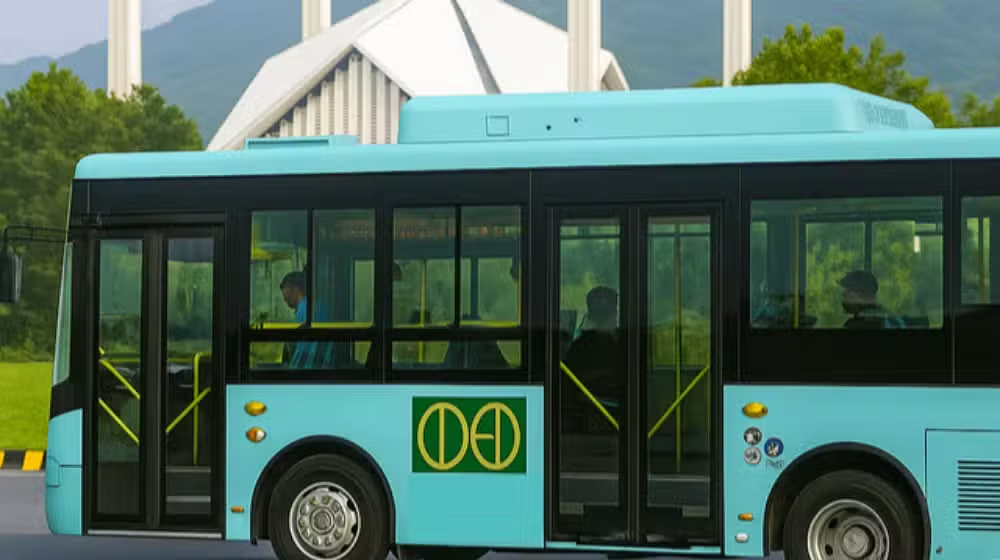
The National Highway Authority (NHA) has denied a request from the Capital Development Authority (CDA) for toll tax exemption on its fleet of electric buses operating in the federal capital. The decision means that the CDA will be required to pay standard toll charges for its public transport vehicles using national highways and motorways.
Read More: Hoechst Pakistan Explores Strategic Expansion, Evaluating Acquisitions and Manufacturing Investments
The CDA had sought exemption from toll taxes for its electric bus fleet as part of efforts to promote environmentally friendly public transportation and reduce operational costs. The authority argued that exempting electric buses from toll charges would encourage the adoption of clean energy vehicles and support the government’s environmental sustainability goals.
NHA’s Position
The National Highway Authority, which manages and maintains Pakistan’s national highways and motorways, rejected the request on the grounds that existing regulations do not provide for toll tax exemptions for public transport vehicles, regardless of their fuel type. The NHA stated that toll collections are essential for the maintenance and upkeep of the national highway network, and granting exemptions would set a precedent that could impact the authority’s financial sustainability.
The NHA emphasized that all vehicles using national highways and motorways are subject to the same toll rates, with exemptions granted only in limited circumstances as defined by law. The authority noted that the CDA’s electric buses, while beneficial for environmental goals, do not fall within the categories eligible for toll exemption under current regulations.
Impact on CDA Electric Bus Operations
The CDA’s electric bus fleet, which operates routes connecting various sectors and destinations within the Islamabad Capital Territory, uses national highways as part of its transit network. With the NHA’s decision, the authority will need to factor toll charges into its operational budget, potentially affecting the overall cost structure of the electric bus service.
The CDA has been working to expand its electric bus fleet as part of a broader initiative to modernize public transportation in the capital and reduce carbon emissions. The fleet serves as a model for sustainable urban mobility, and the toll exemption request was intended to support the financial viability of the service.
Broader Context
The dispute highlights ongoing discussions about the role of toll exemptions in promoting environmentally friendly transportation. While governments globally have implemented various incentives for electric vehicles, including reduced road tolls, Pakistan’s regulatory framework currently offers limited mechanisms for such exemptions.
The NHA’s decision may prompt further debate on whether policy adjustments are needed to support the adoption of electric public transport vehicles. Proponents of green transportation argue that financial incentives, including toll exemptions, could accelerate the transition to cleaner mobility options.
About the National Highway Authority
The National Highway Authority (NHA) is the government body responsible for the construction, maintenance, and operation of Pakistan’s national highways and motorways. The authority manages over 12,000 kilometers of road network across the country.
About the Capital Development Authority
The Capital Development Authority (CDA) is the municipal body responsible for the planning and development of Islamabad, including public transportation infrastructure. The authority has been working to introduce electric buses and other sustainable transport solutions in the federal capital.